
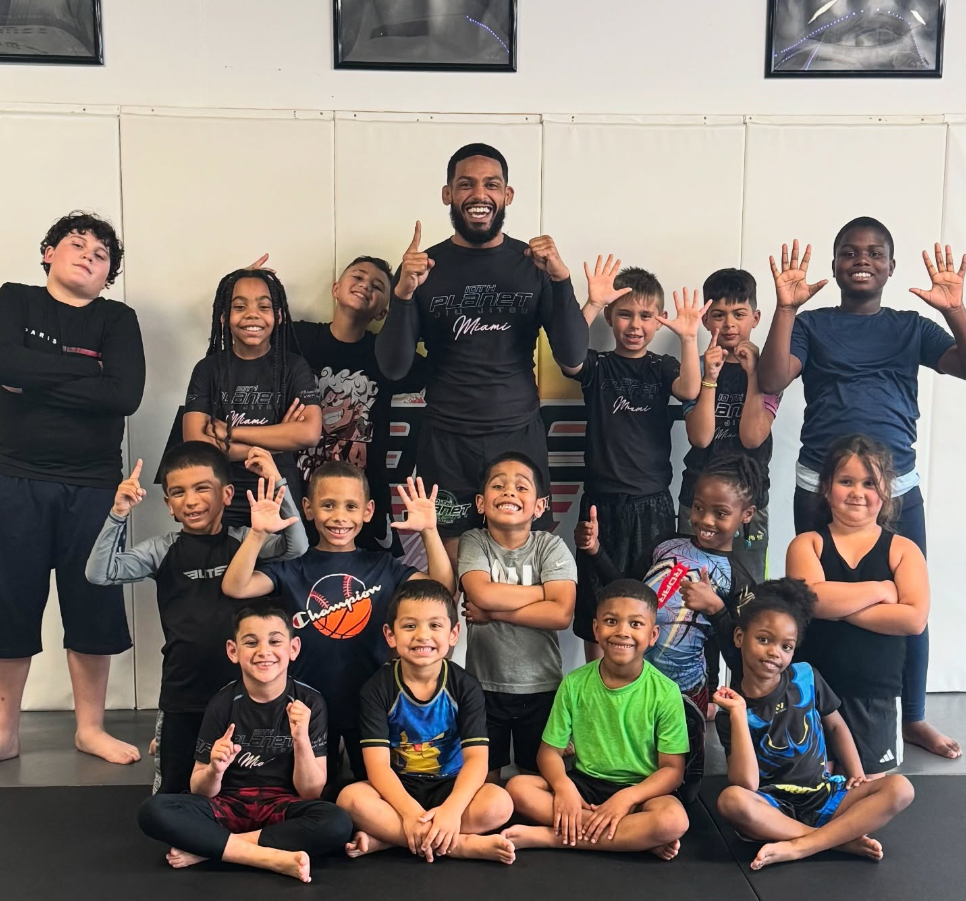
The biggest win is not learning how to fight, but learning how to stay calm enough to avoid a fight.
If you are a parent looking into Youth Jiu-Jitsu, you are probably balancing two very real hopes at the same time: you want your child to feel safe, and you want your child to handle pressure without melting down or lashing out. In Miramar, that combination matters. School dynamics move fast, emotions run hot, and a small conflict can turn into a bigger situation before an adult even realizes what happened.
In our Youth Jiu-Jitsu classes, we train skills that show up off the mat: problem-solving under stress, respectful communication, and choosing control over chaos. We use Brazilian Jiu-Jitsu concepts in a way that is age-appropriate, structured, and focused on safety. The goal is not to create aggressive kids. The goal is to raise kids who can regulate themselves, set boundaries, and de-escalate.
When families ask us whether training encourages fighting, we understand the concern. Our answer is simple: we build capable kids who know that physical skills come last. First comes awareness, voice, posture, and decision-making. The technique is there, but the mindset is what changes everything.
Why Youth Jiu-Jitsu works for conflict resolution
Conflict resolution is not a single skill. It is a chain of small skills that happen in order: noticing danger, controlling your own reaction, communicating clearly, and knowing when to walk away. Youth Jiu-Jitsu gives kids a safe laboratory to practice that chain over and over.
On the mat, kids have to cooperate with partners, follow rules, and handle unfair moments, like getting stuck under someone bigger or losing position after working hard. That is real frustration. We do not rush past it. We teach kids what to do with it.
The grappling environment is especially useful because it is close contact and high pressure, but still controlled. Kids learn quickly that panic makes things worse and that calm breathing, a plan, and a steady voice help them solve the problem.
De-escalation starts with posture and presence
Before we ever talk about a technique, we teach kids to carry themselves with calm confidence. In a school hallway or on a playground, that can be the difference between getting targeted or getting left alone.
We coach:
- A non-aggressive stance that protects space without looking like a challenge
- Eyes up and awareness, rather than shrinking or freezing
- Clear, firm words that set a boundary without insulting someone
Kids often find that when they look less scared and sound more certain, conflicts lose energy. That is conflict resolution in the real world, not just theory.
Verbal assertiveness without disrespect
A lot of kids struggle with tone. They either get quiet and hope the problem goes away, or they get loud and add fuel. Youth Jiu-Jitsu gives us a consistent way to practice assertive communication: short sentences, strong posture, and no extra arguing.
We will rehearse phrases that are simple and practical, like saying no, stepping back, and calling for help. It is not dramatic, and that is the point. When emotions spike, simple language works best.
Emotional control is trained, not wished for
Emotional control is not about never feeling angry, nervous, or embarrassed. Kids feel all of that, sometimes before breakfast. Emotional control is about noticing the feeling and still making a good decision.
On the mat, kids get constant reps at this. A round starts, someone applies pressure, and the body wants to react. Breathing gets shallow. Muscles tense. The mind races. This is where we coach them: slow down, frame, move, escape, reset.
Over time, kids learn that stress is not a stop sign. It is information. That lesson transfers to tests, social situations, public speaking, and even family routines at home.
Resilience through safe discomfort
The weird thing about Youth Jiu-Jitsu is that it makes kids comfortable being uncomfortable, in a healthy way. Getting pinned for a few seconds is not dangerous in class, but it feels intense to a child. Learning how to stay composed in that moment builds grit.
We see it when kids:
- Stop quitting mid-drill because something feels hard
- Ask better questions instead of shutting down
- Bounce back faster after losing a round
That is emotional growth you can actually observe week to week.
Self-regulation: breathing, pacing, and choosing the next best move
When kids roll, we guide them to manage their energy. If a child explodes at 100 percent intensity, fatigue hits fast and frustration follows. When a child learns pacing, their emotions settle too.
We teach simple ideas that kids can remember:
- If you cannot breathe, you cannot think
- If you cannot think, you cannot choose
- If you cannot choose, you just react
That chain is the core of emotional control, and it is why consistent Youth Jiu-Jitsu training can change how a child handles pressure everywhere else.
Anti-bullying skills without teaching violence
Many Miramar families find us because bullying is on their radar. Sometimes it is physical. Often it is social, sneaky, and persistent. Either way, kids need tools.
Youth Jiu-Jitsu helps in two important ways: confidence and capability. Confidence often prevents a situation from escalating in the first place, because bullies tend to look for easy reactions. Capability matters if a child is grabbed, pushed, or taken down. Grappling teaches practical responses like posture, balance, escapes, and control.
We focus on protection, not punishment. Our students learn how to get safe, how to create space, and how to end a problem without escalating into chaos. In other words, we teach kids how to stop a bad moment, not how to win a fight.
Why grappling is a practical safety skill for kids
A lot of real conflicts involve grabbing, pulling, or tackling. Youth Jiu-Jitsu prepares kids for those realities in a controlled setting. Kids learn to:
- Break grips and protect personal space
- Fall more safely and recover position
- Escape from underneath and stand back up
- Use leverage rather than strength to create control
Those skills support a safety-first approach. The message stays consistent: use your voice, create distance, get an adult, and only use physical technique as a last resort.
How our no-gi approach supports real-world control
In our program, we train no-gi, which means kids do not rely on grabbing a uniform. For Youth Jiu-Jitsu, that matters because real-life situations do not come with convenient handles. Kids learn to control using body position, balance, frames, and smart movement.
No-gi training also tends to encourage flow and adaptability. If one plan fails, kids learn to switch to the next option without freezing. That flexibility is not just technical, it is emotional. A child who can adapt physically often adapts better socially too.
We also keep safety front and center. Clean movement, controlled intensity, and clear tapping rules help kids learn responsibility with their training partners. If your child learns one big lesson early, it is this: you can be strong and still be careful.
Age-appropriate control over risky behavior
Kids can get excited, especially when a technique clicks. We coach them to keep control anyway. That teaches empathy in a very practical way: your partner is a person, not a practice dummy.
We reinforce:
- Listening to the coach even when adrenaline is high
- Pausing immediately when a partner taps
- Rolling with different body types respectfully
- Helping newer students feel safe
Those habits build emotional maturity in a way that lectures rarely do.
What a Youth Jiu-Jitsu class looks like in Miramar
Parents often want to know what actually happens in class. The structure matters because structure is what helps kids feel safe enough to grow.
Most youth sessions follow a rhythm: warm-up and movement basics, technique of the day, partner drills, and controlled rounds where kids apply what they learned. We keep things progressive, so beginners are not thrown into confusing situations without support.
A typical class usually lands in the 45 to 60 minute range. For many families, training 2 to 3 times per week creates the best momentum. That frequency is enough to build skill without burning kids out.
The social side: teamwork that feels real
One quiet benefit of Jiu-Jitsu in Miramar, FL is the community factor. Kids have to work with partners, take turns, and communicate. It is not optional. That consistent social practice can improve how kids handle group projects at school, friendships, and even sibling conflict at home.
We see kids learn to lead and to follow. Both are important. And over time, many kids who were shy start to speak up more naturally, not because we force it, but because they feel capable.
A simple timeline of progress parents can expect
Every child grows at a different pace, but patterns show up. Youth Jiu-Jitsu gives kids measurable milestones, and that matters for confidence.
Here is a realistic development timeline we often see when a child trains consistently:
1. Weeks 1 to 4: Your child learns the rules, basic movement, and how to stay calm with contact. Confidence starts to show up in posture and voice.
2. Weeks 4 to 8: Techniques begin to connect, and your child stops panicking in bad positions. Emotional control improves because stress feels familiar.
3. Months 3 to 6: Your child shows better self-regulation, better listening, and more resilience after mistakes. Progress becomes visible at school and home.
4. Beyond 6 months: Your child begins problem-solving creatively, supporting teammates, and handling conflict with more maturity and less reaction.
This is also when many parents tell us the biggest change is not physical at all. It is the calmer attitude under pressure.
Helping your child transfer mat skills to real life
A smart program does not just teach moves. We help kids connect the dots so the lessons stick.
We encourage families to reinforce a few simple carryovers:
- Use calm words first, just like in class
- Step back and create space before reacting
- Breathe and reset when frustration spikes
- Ask for help early instead of waiting until it gets big
If you are dealing with school stress, anxiety, or emotional outbursts, Youth Jiu-Jitsu can become a steady weekly anchor. It is not magic, but it is consistent, and consistency helps kids feel secure.
Get Started
Building a calmer, more confident child takes practice in the moments that feel challenging, and that is exactly what we train for every week. Our Youth Jiu-Jitsu program is designed to teach conflict resolution, emotional control, and practical self-defense in a way that is safe, structured, and genuinely useful for Miramar families.
When you are ready, 10th Planet Jiu-Jitsu Miami is here to help you and your child take that next step with clear coaching, supportive training partners, and a no-gi approach that emphasizes adaptability and control.
Take what you learned here and join a free Jiu-Jitsu class at 10th Planet Jiu-Jitsu Miami.