
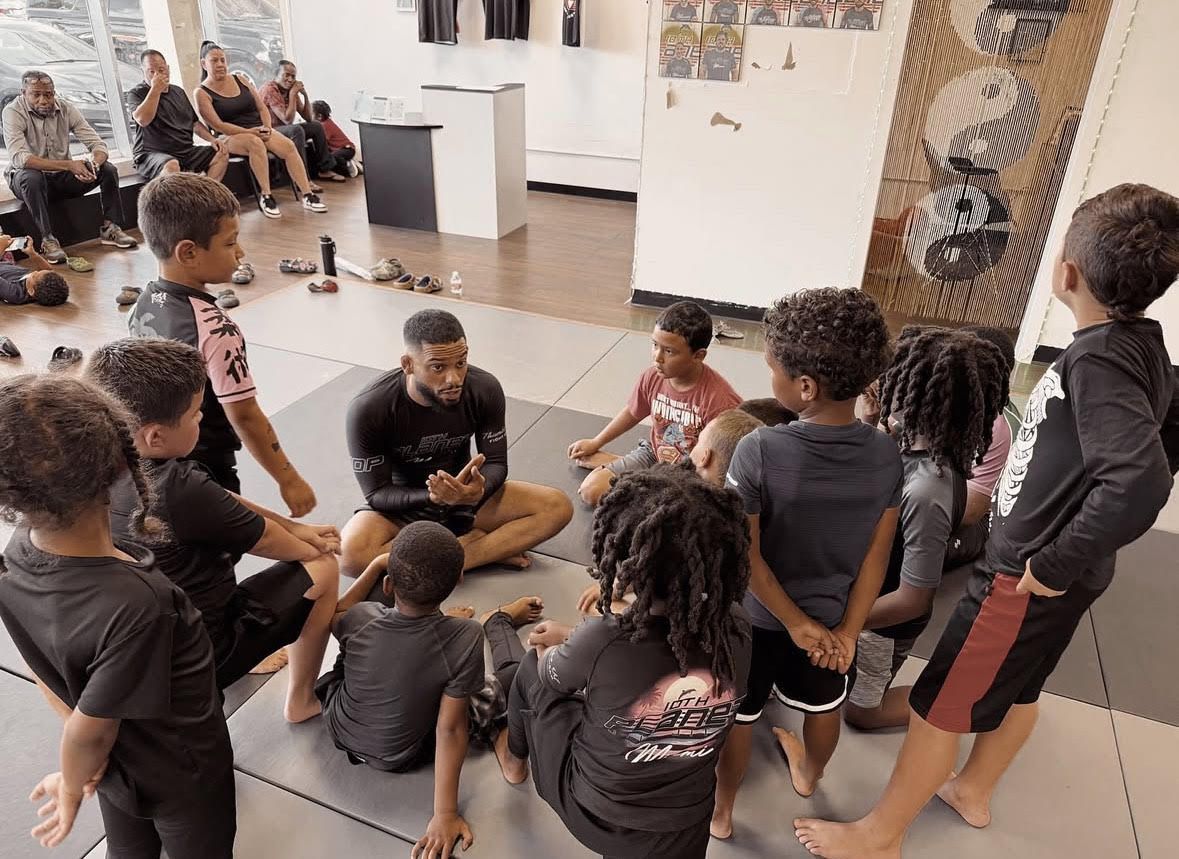
The best first class is the one where your child feels safe, supported, and excited to come back.
Getting your child into Youth Jiu-Jitsu can feel like a big decision, especially if your mental image of martial arts is all hard throws and tough sparring. The truth is, most kids classes look very different from adult training when they are coached correctly: more structure, more supervision, and a lot more focus on movement, listening, and confidence.
We also know parents in Miramar have practical questions: Is this safe, what age should we start, what should my child wear, and how do we avoid injuries? Those are smart questions. Brazilian Jiu-Jitsu has grown into one of the most popular martial arts in the U.S., and with that growth comes a responsibility to do Youth Jiu-Jitsu the right way, with clear rules and age-appropriate progression.
In this guide, we will walk you through how we approach Youth Jiu-Jitsu in Miramar, what safety should look like in a real kids program, and how you can help your child get the benefits without unnecessary risks.
Why Youth Jiu-Jitsu is booming, and why safety has to lead
Youth Jiu-Jitsu has become part of a bigger national shift toward skill-based fitness for kids. Brazilian Jiu-Jitsu is widely considered the fastest-growing martial art in America, with search interest rising dramatically over the last two decades. That popularity is not just a trend. Parents are looking for an activity that builds coordination, resilience, and confidence, not only cardio.
At the same time, we have to be honest about safety. Injury data in grappling sports is real, and one study noted that over half of athletes reported at least one injury over a six-month period, with novices often getting hurt in training more than advanced athletes. Kids programs reduce those risks by controlling intensity, selecting age-appropriate techniques, and keeping a close eye on behavior, spacing, and pace.
Our stance is simple: a safe program is a sustainable program. When safety is built into the curriculum and culture, kids improve faster, stay consistent, and learn to take care of training partners early.
What makes Youth Jiu-Jitsu different from adult classes
If you have watched adult grappling online, you might worry your child will be put into situations that feel too intense. A well-run youth program should not operate like that. Kids need a different on-ramp, and we treat it that way.
In Youth Jiu-Jitsu, the goal is not to see who can “win” practice. The goal is to learn body control, balance, and calm decision-making under gentle pressure. That is where confidence actually comes from.
Our priorities in kids training
We coach toward outcomes that matter in a child’s daily life, including school and social situations. That includes physical skills, but it also includes emotional control and respect.
We also set expectations that protect everyone on the mat. A child who learns to be a good partner becomes safer and more successful over time, even before technique improves.
What age should kids start, and what should you expect at each stage
Parents often want a clear age number. Realistically, readiness is about attention span, comfort with structured instruction, and ability to follow rules in a group. Many kids can start young if the class is designed for them, but the expectations must match the stage.
You can think of Youth Jiu-Jitsu in three practical phases:
Ages 4 to 6: building the “training habits”
At this age, we focus on simple movements, listening skills, and safe contact. You will see lots of repetition and short, clear drills. Progress looks like better coordination and better focus, not complex submissions.
Ages 7 to 10: fundamentals and partner awareness
This is where many kids start to “click” with positions and basic control. We keep it fun, but we also introduce more technical language and goal-setting. Partner safety becomes a bigger theme here.
Ages 11 to 15: skill development, confidence, and optional competition prep
Preteens and teens often want more challenge, and we can build toward that responsibly. We still keep safety at the center, but we can add more situational sparring and structured rounds. If your child wants to compete, we talk through readiness and mindset first.
Is Youth Jiu-Jitsu safe for kids? A realistic answer
No sport is risk-free. But Youth Jiu-Jitsu can be safer than many parents assume when it is taught with rules, supervision, and progressive intensity. A big part of safety is that Jiu-Jitsu is about control. We can slow things down, reset quickly, and choose techniques that are appropriate for kids’ bodies.
We also pay attention to what the sport is doing at the highest levels because trends shape how coaches teach. For example, recent elite submission grappling results show a heavy emphasis on chokes and a decline in heel-hook finishes. That matters because it reflects a more technique-focused, position-first evolution in no-gi grappling, which supports safer learning pathways for younger students when coached responsibly.
Safety in practice comes from structure, not luck
We reduce risk by being intentional about class design. We do not throw kids into chaotic sparring and hope they figure it out. We teach the idea first, drill the movement second, and add resistance only when the child can do it with control.
Our safety checklist for parents before the first class
You do not need to be a grappling expert to evaluate whether a kids program is being run safely. You just need a few practical signals.
Here is what we recommend you look for, and what we build into our Youth Jiu-Jitsu program:
• Clear warm-ups that raise body temperature and prepare joints, not random conditioning that exhausts kids early
• Age-specific groupings so size and maturity are taken seriously, not waved away
• Technique selection that prioritizes position and control, with consistent rules around pressure and pace
• Active coaching during partner work, with instructors watching closely instead of coaching from across the room
• Tap culture taught early, so kids learn to stop when something feels wrong and respect partners who tap
• Clean mats and basic hygiene expectations, because skin infections are preventable and not worth the gamble
If you are unsure about any of these, ask us directly. We would rather answer questions up front than rush you into anything.
What your child will learn first in Youth Jiu-Jitsu
Parents sometimes expect the first month to be “self-defense techniques.” In reality, the first skills are usually movement and position. That is not a delay, it is the foundation. A child who can shrimp, bridge, base, and frame is safer, harder to knock over, and more confident in their body.
We start with posture, balance, and simple escapes because that is where kids feel immediate wins. They learn that they are not stuck, and that calm problem-solving works.
Just as importantly, we teach how to be a good partner: how to move with control, how to communicate, and how to pause when something feels off. Those habits protect everyone, including your child.
Bullying, confidence, and the real-world value of training
Many families come to Youth Jiu-Jitsu because of bullying concerns. We take that seriously, and we also try to set the right expectations. Jiu-Jitsu is not about turning kids into fighters. It is about helping kids carry themselves differently.
When a child trains consistently, posture changes, eye contact improves, and small setbacks stop feeling like the end of the world. That shift is often enough to change social dynamics before anything physical ever happens.
We also emphasize respect and teamwork. Kids learn quickly that progress depends on partners. You cannot improve if you are rough, careless, or disrespectful. That social feedback loop is one of the quiet superpowers of Youth Jiu-Jitsu.
Preventing injuries: what we do, and what you can do at home
The most common preventable issues in kids grappling are small strains, bumped joints, and overuse from doing too much too soon. Our job is to pace training. Your job is mostly recovery and communication.
A simple parent routine that helps
If your child is starting Youth Jiu-Jitsu in Miramar, keep it straightforward:
1. Aim for consistency over intensity, like two classes a week before adding more
2. Prioritize sleep on training days, because tired kids get clumsy faster
3. Pack water and a small post-class snack, especially after school
4. Keep nails trimmed and hair tied back, which sounds small but prevents scratches and distractions
5. Tell us about past injuries or sensitive areas before class starts
If your child says something hurts, we want to know. Pushing through pain is not a virtue in Youth Jiu-Jitsu. Learning to speak up early is part of learning to train safely.
What to wear and bring to the first class
One reason parents love no-gi training is that it is simple. You are not dealing with a big uniform right away if you do not want to. For most first classes, you can keep it minimal and comfortable.
We recommend athletic clothes that fit well and do not have zippers or hard parts. Think rash guard or snug athletic shirt, and shorts or leggings. If your child has sensitive skin, a long-sleeve top can help reduce mat burn.
Please also bring sandals or slides for walking off the mat, and a water bottle. The small details matter, and they make the whole experience smoother.
How progress works: belts, goals, and keeping kids motivated
Kids thrive on visible progress, but motivation can disappear if the only “reward” is winning sparring rounds. We keep progress tied to behavior and skill development: showing up consistently, following instructions, improving movement, and being a respectful partner.
We also like to set simple goals that a child can actually feel. Things like holding a strong base, completing a basic escape, or staying calm in a controlled drill. Those wins stack up quickly.
And yes, sometimes a kid has an off day. That is normal. Youth Jiu-Jitsu teaches kids how to return after frustration, which is a life skill that shows up everywhere.
Youth Jiu-Jitsu in Miramar: what a smart start looks like for families
Families in Miramar are juggling school, activities, and screens competing for attention. The right training environment makes it easier to commit. You want a schedule that fits real life and coaches who understand that kids learn best when they feel safe and seen.
We keep our Youth Jiu-Jitsu in Miramar program organized and predictable because kids do better with rhythm. When your child knows what to expect, anxiety drops and learning speeds up. Over time, the mat becomes a place where effort is rewarded and mistakes are just part of the process.
If you are also looking for a healthy outlet that can help with fitness, confidence, and resilience, Youth Jiu-Jitsu checks a lot of boxes without needing your child to be “naturally athletic” on day one.
Ready to Begin
Building a strong start in Youth Jiu-Jitsu comes down to a few things: an age-appropriate curriculum, clear safety rules, and coaches who care about long-term development more than short-term intensity. If that is what you want for your child, our team is ready to guide you step by step in a way that feels steady and positive.
When you are ready to see how our kids classes run in person, we would love to welcome your family to 10th Planet Jiu-Jitsu Miami. We keep the process simple, answer questions directly, and help your child feel comfortable from the first warm-up to the final high five.
Ready to train on the mat? Join a free Jiu-Jitsu class at 10th Planet Jiu-Jitsu Miami today.