
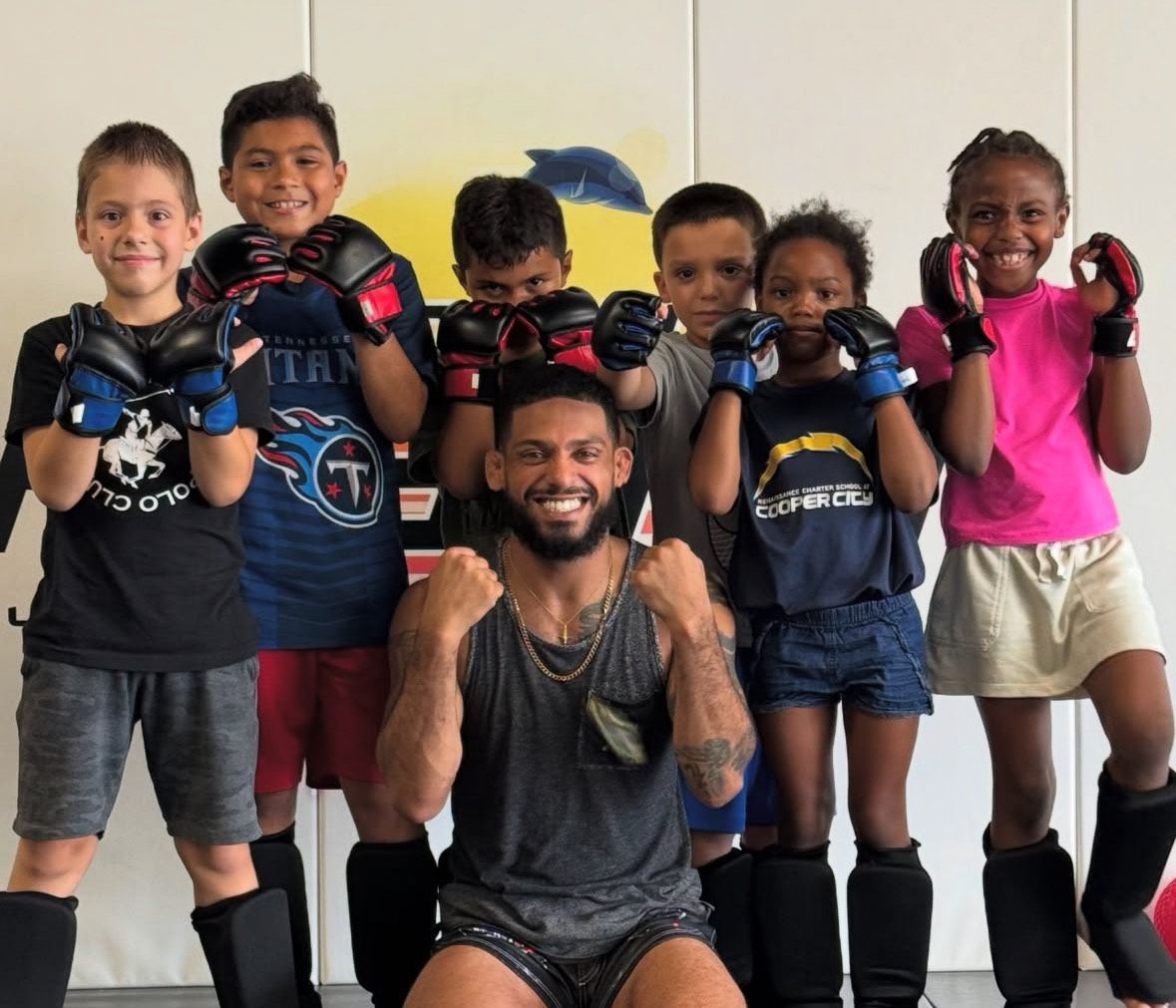
The right kind of training doesn’t just teach kids how to move, it teaches them how to think.
Youth Jiu-Jitsu is one of those activities that looks like “just a sport” at first glance, but quickly turns into something bigger for families. We see it every week: kids walk in with scattered energy, uncertain posture, or that end-of-school-day restlessness, and over time they start showing up differently, eyes up, listening faster, moving with purpose.
What makes Youth Jiu-Jitsu so effective for kids is how naturally it blends structure with play. Our classes give clear rules, clear goals, and a safe place to work hard, but it still feels fun. And because progress is personal, kids learn to compete with yesterday’s version of themselves, not the loudest kid in the room.
Parents ask us a lot of practical questions, too: Will this help with focus at school, confidence around bullies, or screen-time habits? The encouraging part is that the research lines up with what we experience on the mats. In a 2024 survey, parents reported improvements in confidence (96.4 percent), mental flexibility (92.9 percent), commitment and mood (92.8 percent), concentration (78.6 percent), and respectfulness (78.5 percent) after Brazilian Jiu-Jitsu training. Those are not small changes, and for many families, they’re exactly the changes you’re hoping to see.
Why Youth Jiu-Jitsu works so well for focus
Focus is not something kids either “have” or “don’t have.” Focus is a skill, and skills get trained through repetition, feedback, and the right environment. On the mats, focus becomes practical: listen, try, adjust, try again. Kids learn quickly that paying attention makes everything easier.
In Youth Jiu-Jitsu, we teach techniques in bite-sized pieces. A position has details: where your hands go, where your hips go, what your head does. Kids learn that one small mistake changes the outcome, which is a gentle, real-time lesson in concentration. That kind of immediate feedback is powerful.
We also build focus through predictable routines. Class has a rhythm: warm-up, drilling, partner work, and controlled sparring. Kids relax into the structure. When they know what’s coming next, they stop scanning the room and start engaging with the task.
The “thinking game” effect of grappling
Jiu-Jitsu is physical, but it’s also a problem-solving game. Kids get curious, and curiosity holds attention better than lectures ever will. When a child has to figure out how to escape a hold or keep balance, attention stops being a chore and becomes the tool that helps them win the moment.
A 2024 Australian Institute of Sport report found that twice-weekly martial arts training helped most trainees experience gains in resilience and focus, likely tied to the way training rewires habits and decision-making under pressure. We see that same pattern: kids learn to pause, breathe, and make a smart choice instead of panicking or checking out.
Strength that actually transfers to real life
When parents hear “strength,” some imagine kids doing endless push-ups. Our approach is different. We build strength the way kids actually use it: through movement, leverage, coordination, and body awareness.
Youth Jiu-Jitsu develops full-body strength without needing heavy weights. Kids push, pull, bridge, squat, crawl, and stabilize. Over time, that creates stronger hips, legs, core, and grip, plus better posture and balance. It’s the kind of athletic base that helps in everyday life, whether your child is carrying a backpack, playing at the park, or just moving with more confidence.
There’s also a cardio benefit that sneaks up in a good way. Grappling involves bursts of effort and recovery, which is great conditioning. And because training is engaging, kids often work harder than they would in a typical workout, without thinking of it as “exercise.”
Coordination, proprioception, and “knowing where your body is”
One of the most underrated benefits of Jiu-Jitsu in Miramar, FL is how it improves coordination and proprioception, basically, your child’s sense of where their body is in space. That matters for sports, of course, but it also matters for safety, clumsiness, and confidence.
Kids learn how to fall properly, how to base out with hands and feet, and how to control speed and pressure. Those are physical skills, but they’re also self-control skills. The body learns to stay calm under movement, and the mind tends to follow.
Respect isn’t taught as a speech, it’s built into the mat culture
Respect is one of the first things families notice. Not because we give long talks about it, but because the training demands it. In Youth Jiu-Jitsu, your partner is your learning tool, and you are theirs. If a kid goes too rough or ignores instructions, training stops working. Kids learn quickly that you can’t improve without cooperation.
Respect also shows up in small routines: lining up, listening when someone else is speaking, and following safety rules even when you’re excited. Those habits transfer. Parents often tell us the same thing in different words: “My kid is more coachable now,” or “She handles correction better.”
The same 2024 parent survey that highlighted concentration and confidence also showed 78.5 percent reporting improved respectfulness. That matches what we aim for: a room where kids can be kids, but still learn how to carry themselves with maturity.
Confidence without aggression
A concern we hear sometimes is whether martial arts will make a child more aggressive. Our experience is that the opposite happens when training is structured well. Kids get the “pressure valve” release of physical movement, and they learn boundaries at the same time.
Because grappling is controlled and supervised, kids experience intensity in a safe container. They get comfortable with challenge without needing to lash out. Confidence grows, and when confidence grows, the need to prove something usually fades.
Is Youth Jiu-Jitsu safe for kids?
Safety is a fair question. We treat it seriously, because your child’s body and confidence are both in our hands. Jiu-Jitsu is primarily ground-based, which generally reduces the type of head-impact risk you see in sports with collisions or striking. That doesn’t mean it’s risk-free, but it does mean we can control the environment closely.
We keep safety strong through coaching, rules, and class structure. Kids learn to tap early, respect taps immediately, and avoid dangerous behavior. We also match partners with care, and we emphasize technique over brute force so kids don’t rely on size to “win.”
If your child is new, we start with fundamentals and controlled movement before adding more live sparring. That progression matters. It’s how kids build skill without feeling thrown into chaos.
The bullying and confidence connection for Miramar families
Bullying is a reality for many families. Nationally, about 20 percent of students aged 12 to 18 report being bullied, and the emotional effects can show up as anxiety, avoidance, or sudden changes in mood. Youth Jiu-Jitsu helps by giving kids tools and posture, both literal and social.
We coach kids on awareness, personal space, and calm reactions. The goal is not to “fight back.” The goal is to stay safe, create options, and keep emotions under control. A child who learns how to escape grips, control distance, and stay composed often carries themselves differently in school hallways. That body language alone can reduce unwanted attention.
Confidence is also strongly supported by research. In that 2024 survey, 96.4 percent of parents reported improved confidence in children training BJJ. Confidence doesn’t mean your child becomes loud. It usually means your child becomes steady.
What your child learns in our Youth Jiu-Jitsu classes
We build classes to support both skill and character. While each age group has its own pace, the core themes stay consistent: safety, fundamentals, progress, and positive training habits.
Here are a few pillars you can expect in our Youth Jiu-Jitsu program:
- Positional fundamentals like mount, guard, side control, and back control so your child learns where they are and what to do next
- Escapes and defense-first habits that teach kids to stay calm and problem-solve under pressure
- Movement and conditioning that develops real athleticism: balance, core strength, coordination, and endurance
- Controlled sparring that teaches timing and emotional control, not reckless intensity
- A respect-based culture where kids learn to be a good partner, accept coaching, and take responsibility for safety
These elements work together. A kid who trains consistently doesn’t just memorize techniques, your child learns how to learn.
A realistic timeline: when families usually notice changes
Every child develops differently, but patterns show up when training is consistent. We like to set honest expectations so you can watch progress without guessing.
A simple timeline many families experience looks like this:
1. First month: Your child feels more comfortable in class routines and starts remembering basic positions and safety rules
2. Months two to three: Coordination improves, listening improves, and kids begin showing more confidence during partner work
3. Months four to six: Strength and conditioning are noticeably better, and focus often carries into school and home routines
4. Beyond six months: Kids start linking techniques, making smarter decisions under pressure, and showing more mature self-control
Belts and milestones help, too. Kids like seeing progress, and structured recognition can be a healthy motivator when it’s paired with good coaching and effort.
Training frequency, schedules, and what “commitment” really means
Most families in Miramar want something that fits real life: school, homework, dinner, and everything else. Youth Jiu-Jitsu doesn’t have to take over your calendar to be effective.
We typically recommend starting with one to two classes per week, then adjusting as your child’s interest grows. Research on martial arts training benefits often points to twice-weekly practice as a sweet spot for noticeable gains in resilience and focus. Consistency matters more than marathon sessions.
If you’re wondering how it fits, the class schedule is the best tool. We keep it clear so you can plan around school pickup and after-school routines without stress.
Why no-gi training keeps kids engaged
Kids learn best when learning feels like discovery. Our system emphasizes no-gi grappling, which often feels more like athletic movement than a uniform-based activity. That can keep kids engaged, especially kids who like fast feedback and variety.
No-gi also encourages strong fundamentals: grips change, balance matters, and kids learn to control with positioning rather than holding fabric. That builds smart movement and adaptable problem-solving, which supports the focus piece in a very real way.
When families look for Youth Jiu-Jitsu in Miramar, we want you to feel confident that the training is modern, structured, and designed for kids as kids, not as miniature adults.
Take the Next Step
If you want an activity that helps your child build attention skills, real strength, and everyday respect, our Youth Jiu-Jitsu program is built for that. We keep training structured, safe, and challenging in the right way, and we care just as much about how your child behaves off the mats as how your child performs on them.
At 10th Planet Jiu-Jitsu Miami, we welcome Miramar families who want a positive, skill-building routine that actually sticks, week after week. When you’re ready, we’ll help you choose the right starting point and a schedule that feels realistic for your household.
Develop real Jiu-Jitsu fundamentals through structured training by joining a free class at 10th Planet Jiu-Jitsu Miami.