
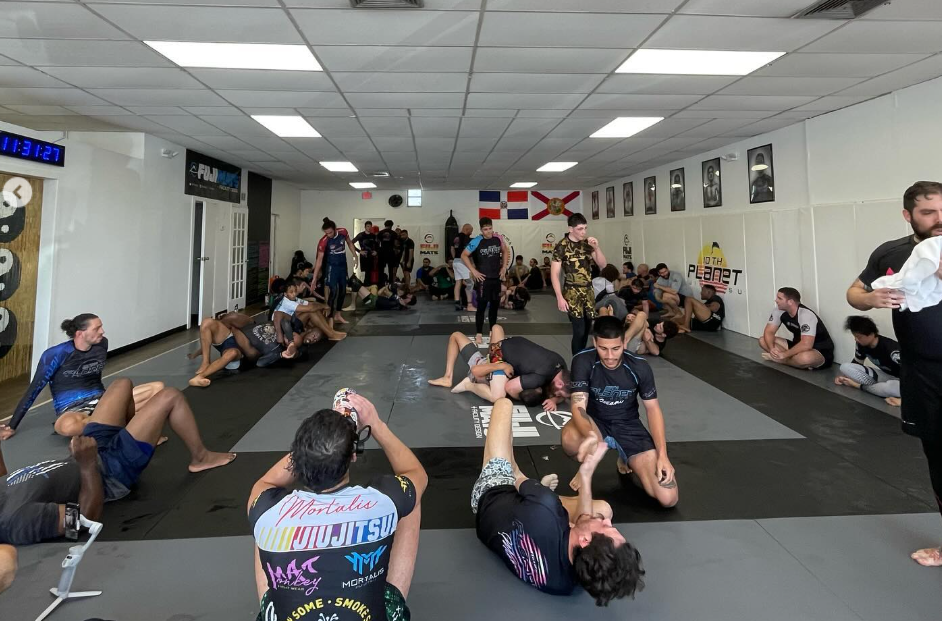
Jiu-Jitsu turns busy adult life into a clear routine you can feel in your body and your mindset within weeks.
If you have ever wanted a training routine that improves your fitness and your headspace at the same time, Jiu-Jitsu is one of the most practical options you can choose in Miramar. It is challenging, yes, but it is also strangely calming once you understand the basics. You are solving problems with your whole body, one position at a time.
We see it all the time with new adults: you show up for fitness, self-defense, or stress relief, and you stay because training gives you structure. The mat is a place where your phone stops mattering, your posture improves, and you start paying attention to details again. That focus carries into work, family, and everything else that competes for your energy.
Jiu-Jitsu participation has grown significantly in recent years, with estimates in the millions worldwide and strong year-over-year growth. That growth is not just hype. It reflects what adults are discovering firsthand: grappling is a skill you can build steadily, and it rewards consistency more than raw athletic talent.
Why Jiu-Jitsu clicks for adults in Miramar
Miramar is a city where schedules fill up fast. Commutes, family routines, and long workdays can make exercise feel optional. Our experience is that adults do better when training is specific and social, not just another solo workout. When you have partners expecting you on the mat, consistency gets easier.
Jiu-Jitsu is also efficient. In one class, you train conditioning, coordination, grip and core strength, balance, and decision-making under pressure. You are not just burning calories. You are learning how to move, frame, escape, control, and stay composed when things get uncomfortable.
And because submissions are a central part of competitive grappling, the sport naturally rewards technique and timing. You do not need to be the strongest person in the room to make progress. You need a plan, a few reliable mechanics, and the patience to repeat them until they feel natural.
Boost focus fast: how training rewires attention
One of the first benefits many students notice is mental sharpness. In class, you are forced to pay attention to small details, like where your hips are, whether your elbow is exposed, or how your opponent is shifting weight. Miss a detail, and you feel it immediately. That feedback loop is honest and immediate.
We also teach in a way that keeps your brain engaged. You learn a technique, then you test it in controlled rounds, and then you troubleshoot it with a coach and training partners. That process builds a kind of practical focus that is different from staring at a screen.
Over time, you start to recognize patterns: common setups, predictable reactions, and moments where you can slow the exchange down. That calm recognition is what people mean when they say Jiu-Jitsu helps with stress. It is not that life stops being stressful. It is that you get better at staying present.
Build real-world strength without living in the weight room
Strength matters in grappling, but the kind of strength you build on the mat is useful outside the gym. Think posture, hip control, pulling strength, and the ability to stabilize your spine while you move. It is functional in the most literal sense.
We also like that you can scale the intensity. Some days you come in and push hard. Other days you train technical, keep your rounds lighter, and still learn. That flexibility is huge for adults over 30 or 40 who want progress without feeling wrecked.
No-gi training, in particular, tends to develop strong movement habits because you cannot rely on grabbing fabric. You learn to connect with underhooks, head position, and body control. It can feel slippery at first, but once it clicks, your movement gets cleaner and more efficient.
Community that shows up when you do
A good training community is not loud or forced. It is simple: people greet you, partners help you learn, and everyone understands that beginners are part of the room, not in the way. That is the environment we work hard to maintain.
Adults often tell us they want a place that feels welcoming but still serious about progress. That is a fair ask. You should be able to train with people who challenge you and also feel safe asking questions. The best training rooms have both.
The community aspect also supports long-term motivation. Fitness goals are easy to start and easy to quit. Skill goals are different. When you can track improvement in escapes, control, and confidence, you keep coming back.
Gi vs no-gi: what you should know before your first class
A common question is whether you should start with a gi or no-gi program. In gi training, you wear a kimono and grips on the fabric matter a lot. In no-gi, you typically wear a rash guard and shorts or spats, and control relies more on body positioning, pressure, and hand fighting.
We focus on no-gi because it matches where modern grappling is headed. Submission-only events, high-level no-gi tournaments, and wrestling-heavy entries are increasingly visible, and the skills translate well to practical self-defense scenarios where clothing grips might not be reliable.
That said, you do not need to know any of that on day one. You only need to show up ready to learn, listen, and move carefully.
What to expect in your first week of Adult Jiu-Jitsu in Miramar, FL
Your first week should feel structured, not overwhelming. We do not throw new students into chaos. We teach fundamentals that help you survive, understand positions, and build confidence quickly.
Here is what most beginners experience early on:
- You learn basic safety habits like tapping early, moving with control, and protecting your neck and joints
- You practice a small set of core positions, often from top control, guard, and escapes
- You drill techniques with a partner at a measured pace, then increase intensity gradually
- You get coached on breathing and pacing, because beginners tend to hold their breath
- You leave tired, but in a good way, like your body did something meaningful
If you are worried about being “behind,” do not be. Everyone starts as a beginner, and the learning curve is part of the process. The important thing is showing up consistently enough that the basics stop feeling foreign.
A simple 30-day plan to feel real momentum
Adults usually want to know how often to train to see results. We like clear plans because they remove guesswork. If you train a little, consistently, you will feel changes faster than you think.
A practical first month looks like this:
1. Week 1: Train 2 times, focus on learning how to move safely and understand positions
2. Week 2: Train 2 to 3 times, start recognizing common patterns like frames, hip escapes, and posture
3. Week 3: Train 3 times, add controlled sparring rounds and begin tracking a few “go-to” techniques
4. Week 4: Train 3 times, focus on smoother transitions and calmer breathing under pressure
Within 30 days, you should feel better conditioning, improved coordination, and a noticeable drop in mental clutter after class. You will not be a different person overnight, but you will be a more capable version of yourself.
Training smarter: recovery, wearables, and staying consistent
One of the newer trends in grappling is recovery tracking. More students are using wearables to monitor sleep, resting heart rate, and overall strain. We support that mindset because consistency matters more than heroic workouts.
If you want to train regularly without burning out, a few habits help:
- Prioritize sleep, especially on training nights, because your body learns and recovers while you rest
- Hydrate early in the day, not just right before class
- Keep your first month intensity moderate, even if your ego wants to sprint
- Take notes on what you are learning, because mental reps speed up progress
- Communicate about injuries or limitations so we can help you modify safely
This approach matters for adults with demanding schedules. If you can train two or three times per week for months, you will surpass the person who trains hard for two weeks and disappears for six.
Is Jiu-Jitsu good for self-defense?
Yes, and not because you learn flashy moves. You learn how to manage distance, control limbs, get up safely, and stay calm while someone resists you. That last part is the big difference between theory and skill.
We emphasize positional control, escapes, and practical submissions because those skills show up in real situations. Standing exchanges and takedown awareness are also getting more attention across the sport, and we incorporate that trend in a way that makes sense for adults. You do not need to become a full-time wrestler. You do need to understand balance, base, and what happens when someone grabs you.
Self-defense training should also be responsible. We coach you to train with control, respect your partners, and tap early. Progress comes from staying healthy enough to keep showing up.
What to wear and bring to your first class
Keep it simple. For no-gi classes, wear athletic gear that stays in place. If you have a rash guard, great. If not, a fitted athletic shirt works for day one. Shorts without pockets are ideal.
Bring water, and arrive a bit early so we can get you oriented. If you have questions, ask them. We would rather explain something twice than have you guessing and getting frustrated.
Take the Next Step
If you want Jiu-Jitsu in Miramar, FL that builds focus, strength, and a real sense of community, we are ready to guide you with a clear plan and a supportive room. When you train with us, you are not just working out. You are learning a skill set that grows with you, month after month.
Our Miramar location at 6315 Miramar Pkwy, Miramar, FL 33023 is where we run Adult Jiu-Jitsu in Miramar, FL with an emphasis on modern no-gi grappling. When you are ready, 10th Planet Jiu-Jitsu Miami is here to help you start smart, stay consistent, and enjoy the process.
Train with purpose and develop a well-rounded skill set through consistent Jiu-Jitsu training at 10th Planet Jiu-Jitsu Miami.