
The fastest way to feel better in your body and calmer in your head is to learn fundamentals that actually stick.
If you have been curious about Jiu-Jitsu in Miramar, FL, fundamentals are the place where everything starts to make sense. We meet a lot of adults who want training that feels practical, not performative, and that supports real life: tighter hips from desk time, busy schedules, and stress that does not always turn off on its own.
Our fundamentals approach is simple on purpose. We build your base first, then your movement, then your confidence. You do not need to be “in shape” to start. You just need a willingness to learn, ask questions, and show up consistently, even if it is only a couple times a week at first.
In this guide, we will walk you through what fundamentals classes look like, why no-gi training matters, how Jiu-Jitsu supports flexibility, focus, and stress relief, and how to start safely as an adult in Miramar.
Why fundamentals matter more than intensity
It is easy to assume Jiu-Jitsu is only about sparring hard and collecting techniques. In reality, fundamentals are what make the art feel usable. When your posture is stable, your frames are correct, and your movement is efficient, you conserve energy and stay safer. That is when training starts to feel less like survival and more like skill development.
We also use fundamentals to help you understand position before submission. Instead of chasing flashy finishes, we focus on how to control space, protect yourself, and escape bad spots. Those are the skills you will rely on most, whether your goal is self-defense confidence, better fitness, or simply learning something challenging that keeps you mentally present.
For adult beginners, fundamentals do something else that is underrated: they reduce decision fatigue. You are not trying to remember fifty options. You are building a small set of reliable answers, then sharpening them through repetition.
What Jiu-Jitsu fundamentals teach first
A solid fundamentals class should feel structured, progressive, and clear. We teach skills that show up in every roll, not just one scenario. Even if you are brand new, you will start understanding why certain movements work and how to make them work for your body type.
Here is what we typically emphasize early on:
• Stance, base, and posture so you can stay balanced and harder to move
• Breakfalls and safe movement patterns to reduce bumps and awkward landings
• Frames and distance management to protect yourself and create space
• Escapes from common positions so you are not stuck when pressure increases
• Positional control basics like how to hold top position and stabilize
• Simple submissions with correct mechanics so you learn control, not cranking
You will notice that none of this requires you to be fast or explosive. Fundamentals reward patience and attention to detail. Over time, that is exactly what improves your performance and makes training feel smoother.
The beginner progression we use in class
We like to keep the learning curve realistic. Most adults learn best when the steps are obvious and the pace is steady. In fundamentals, we usually progress like this:
1. Learn the movement and key details slowly, with coaching and corrections
2. Drill with light resistance so your body learns timing and pressure
3. Add a situational round where you start from a position and work one goal
4. Build toward controlled sparring when you are ready, not when you are rushed
That structure matters because it helps you feel improvement week to week. You are not guessing whether you are “doing it right.” You are getting feedback, repetition, and a plan.
Why no-gi fundamentals feel especially practical in Miramar
When people picture Jiu-Jitsu, many imagine the traditional uniform with grips and collars. No-gi removes those grips and replaces them with control based on positioning, underhooks, head and arm ties, and body mechanics. It is faster in feel, but it also highlights fundamentals in a very honest way: if your base and posture are off, you will know quickly.
In our experience, adults in Miramar often appreciate no-gi because it translates cleanly to real-world movement. You learn to control someone without relying on clothing handles. You also spend a lot of time learning how to manage slippery situations, scramble safely, and use leverage instead of strength.
No-gi training also tends to be straightforward from day one. You show up, you learn how to move, you drill, and you build comfort with contact in a controlled environment. That simplicity is a big reason many people stick with it.
Flexibility and mobility: what changes when you train consistently
Flexibility is not only about stretching longer. It is also about learning positions your body is not used to, then building strength and control in those ranges. Jiu-Jitsu does that naturally. You will squat, hinge, rotate, bridge, and shift your weight in ways that most gym routines do not cover.
Over time, many adults notice improvements in everyday movement: getting up from the floor feels easier, hips feel less stuck, and posture improves. We also emphasize warm-ups that prepare your joints for grappling, not random exercises that just burn time.
A realistic note: you will feel new muscles in the beginning. Some soreness is normal. The goal is not to push through pain, but to adapt gradually. We would rather have you train two to three times per week for months than go too hard for two weeks and disappear.
Small habits that help flexibility outside the mats
If flexibility is a priority, a few simple habits make a big difference:
• Take five minutes to do hip and hamstring mobility on non-training days
• Breathe slowly in stretches instead of forcing range
• Walk daily, even a short loop, to keep tissue warm and joints moving
• Sleep enough to recover, because tightness often shows up when recovery is low
None of that is glamorous, but it works. And it makes your Jiu-Jitsu feel better faster.
Focus and mental clarity: why fundamentals sharpen your attention
Jiu-Jitsu demands presence. You cannot multitask while someone is trying to control your posture. That is part of the appeal. Training gives your mind one job: solve the problem in front of you, using technique.
Fundamentals sharpen focus in a specific way. You repeat a movement, then notice what breaks under resistance, then adjust. That loop trains attention to detail, patience, and calm decision-making. Many adults tell us that after class, their head feels quieter. Not because life is suddenly easy, but because the nervous system got a reset.
We also coach you to slow down. Beginners often rush, hold their breath, and use too much muscle. Fundamentals teach you to breathe, frame, and move with intention. That mindset carries over into work, parenting, and the general chaos of a full schedule.
Stress relief you can actually feel, not just talk about
A good class is physically demanding, but the stress relief comes from structure. You show up, you follow a plan, and you work with training partners in a controlled setting. There is something grounding about that. You are not doom-scrolling. You are learning a skill, minute by minute.
We keep the room welcoming and coachable, especially in beginner classes. You are allowed to be new. You are allowed to ask the same question twice. Most adults do, honestly. The stress relief comes partly from moving your body, and partly from being in a place where progress is measured in small wins: a cleaner escape, a better base, a calmer breath.
If your days feel mentally crowded, training gives you an hour where the only thing that matters is the next rep. That simplicity is powerful.
Adult fundamentals: how often should you train to see results?
For Adult Jiu-Jitsu in Miramar, FL, consistency beats intensity. We typically recommend starting with two to three classes per week. That frequency gives you enough exposure to remember what you learned and build conditioning without overwhelming your recovery.
If you can only make it once a week, you can still improve, but it will feel slower. If you jump to five days a week right away, you might improve fast, but your joints and energy may not love it. Most adults do best with a steady rhythm, then add days once the body adapts.
We also encourage you to use the class schedule to build a routine that fits your life instead of fighting your life. When training is sustainable, you stick with it, and that is when Jiu-Jitsu really starts to change you.
What to expect in your first class
First classes come with nerves. That is normal. We keep the onboarding clear so you are not guessing where to stand or what to do with your hands.
You can expect a warm-up that focuses on movement, a technical segment where we teach fundamentals, drilling with a partner, and sometimes positional work depending on the day. You will not be thrown into something unsafe. We coach control, communication, and pacing.
What to bring and wear
No-gi is simple. Here is what we recommend:
• A fitted rashguard or athletic shirt that stays in place
• Grappling shorts or athletic shorts without pockets or zippers
• A water bottle and a small towel
• Flip-flops or slides for off the mats
• A mindset of learning, not proving anything
If you are unsure, check the website for guidance before you arrive. We would rather you feel prepared than overthink it.
Safety, longevity, and training smart as an adult
Safety is not an afterthought in Jiu-Jitsu. It is a skill. We coach you on tapping early, communicating with partners, and choosing the right intensity for your experience level. The goal is to train for years, not win a random round on a Tuesday night.
We also help you understand how to pace your body. Some days you feel great and move fast. Other days you move slower and focus on technique. Both are productive when your fundamentals are solid.
If you are returning to exercise, or you feel “not flexible enough,” fundamentals are still the right entry. We can scale drills, adjust positions, and help you build confidence gradually.
Take the Next Step
Building flexibility, focus, and stress relief through Jiu-Jitsu is not about being tough on day one. It is about learning fundamentals that make you feel capable, then stacking small improvements until they become part of how you move and think. When you train consistently, you start to notice it outside the gym too: calmer reactions, better posture, more patience, and a body that feels more athletic.
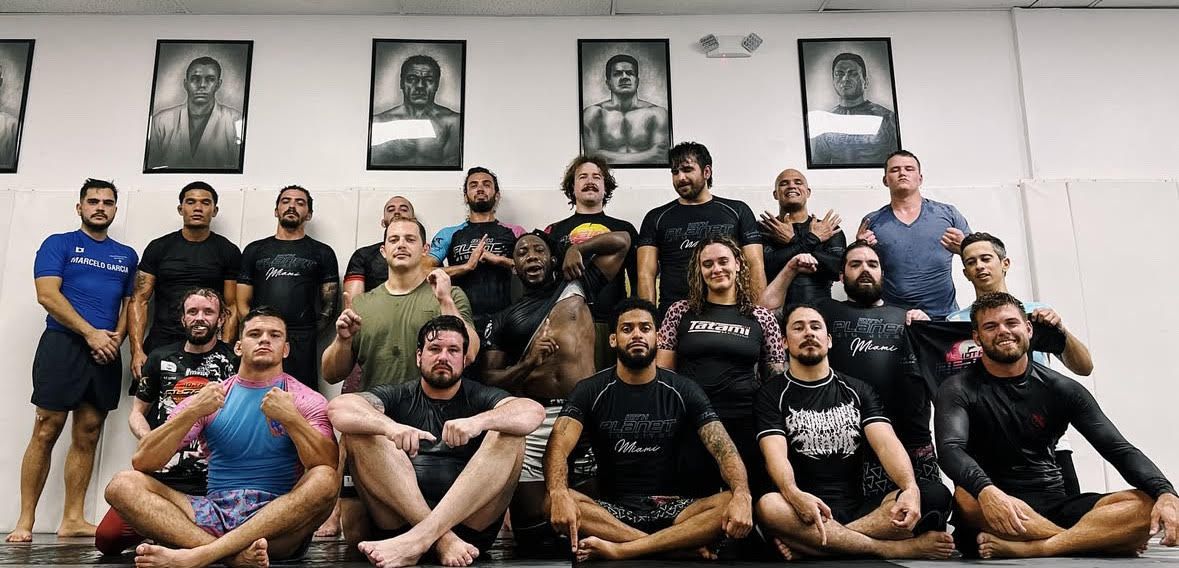
We teach that process every day at 10th Planet Jiu-Jitsu Miami, right here in Miramar, with beginner-friendly no-gi fundamentals that meet you where you are and help you progress without the confusion. If you are ready to start, we will guide you step by step at 10th Planet Jiu-Jitsu Miami.
See what makes training at 10th Planet Jiu-Jitsu Miami exceptional by joining a Jiu-Jitsu class today.