
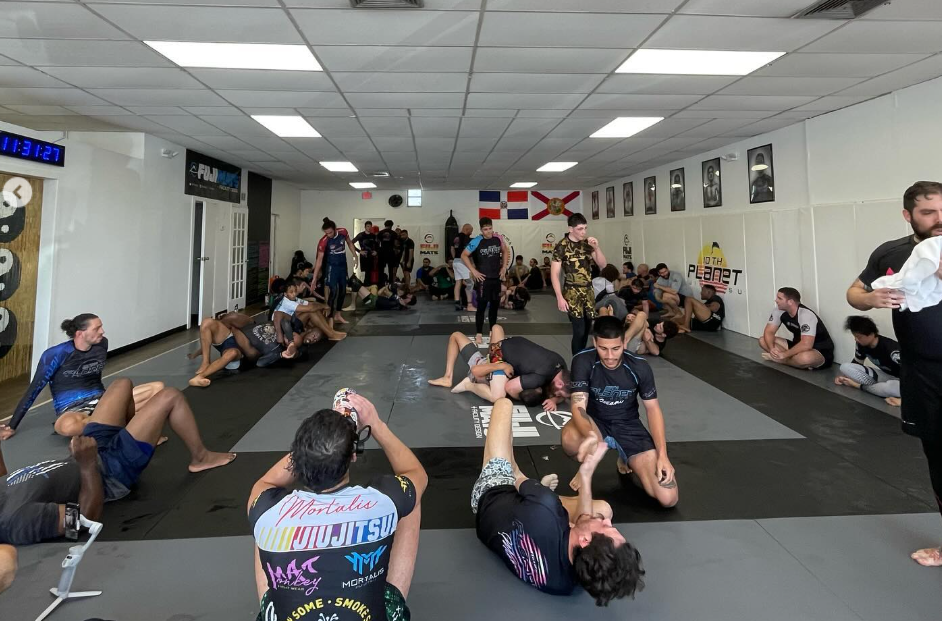
Jiu-Jitsu gives you a practical way to get stronger, steadier, and harder to shake, on and off the mats.
Adult life in Miramar can feel like a constant balancing act: work demands, family schedules, traffic, stress, and the quiet reality that our bodies do not bounce back like they used to. That is exactly why so many adults look for training that builds real resilience instead of just “getting a workout.” Jiu-Jitsu fits that need in a way most fitness routines cannot.
We see it every week: adults who start out a little unsure, a little stiff, maybe even a bit skeptical, and then gradually become calmer under pressure and more balanced in how they move. The cool part is that you do not have to be naturally athletic to begin. You just need a willingness to learn, show up, and build consistency.
In this guide, we will break down how training supports mental resilience and physical balance, what you can expect as a beginner, and how our adult program in Miramar is structured so you can train hard without feeling like you are wrecking your body.
Why Adults in Miramar Choose Jiu-Jitsu for Resilience
Resilience is not just “toughness.” For most adults, resilience means staying steady when life gets loud, adapting when something goes wrong, and recovering without spiraling. On the mat, you practice those skills in a controlled environment, which is why the lessons transfer so well to real life.
Jiu-Jitsu creates small, repeatable challenges. You learn a position, try it, fail a bit, adjust, and try again. That cycle sounds simple, but it is powerful. It trains your brain to treat setbacks as information, not as proof you “cannot do it.” Over time, that mindset starts showing up in how you handle stress at work, conflict at home, or even the normal frustrations of daily routines.
There is also something uniquely grounding about grappling. When you are focused on posture, breathing, frames, and escapes, your mind has less room to replay emails, deadlines, or worries. It becomes a moving meditation, except you are also learning a real skill.
The long game builds grit (and it is backed by the numbers)
One reason Jiu-Jitsu develops resilience is that it is a long-term practice. A large 2024/2025 survey of nearly 2,000 practitioners reported average times to earn belts that stretch across years: roughly 2.3 years to white belt progression, about 2.3 more to blue, and the timeline continues into a decade-long journey for brown belt. That is not a quick-fix hobby. It is a discipline you grow into.
We like that reality because it sets honest expectations. You are not “behind” if you are learning slowly. You are normal. Consistency wins, and that is a lesson adults can apply everywhere.
How Jiu-Jitsu Improves Balance (Especially for Adults)
Balance is not just standing on one leg. In grappling, balance is the ability to manage your weight, base, posture, and alignment while someone is actively trying to break it. That kind of balance carries over into everyday movement, especially as adults notice changes in stability over the years.
A lot of our training happens close to the ground, which is a big advantage for adults. You are developing control, coordination, and core stability without relying on high-impact jumping or repetitive pounding. Instead, you work through angles, pressure, hip movement, and leverage, which are kinder to the joints while still challenging your body.
When you train consistently, you start feeling “more connected” to your body. Your feet know where to go. Your hips move more freely. Your reactions get cleaner. That is proprioception, and it matters for everything from picking up a heavy box to stepping off a curb in the rain.
What balance looks like on the mat
Balance in Jiu-Jitsu shows up in a bunch of practical ways:
• Keeping your base while you are in someone’s guard and not getting tipped forward
• Staying stable in side control without using brute strength
• Escaping bottom positions by connecting hips, elbows, and frames
• Passing with posture so you do not fall into traps
• Standing up safely from the ground with technique instead of a scramble
We train these patterns constantly, and adults tend to notice improvements in 6 to 12 months when they attend 2 to 3 times per week. The changes are not flashy, but they are real and useful.
Resilience Is a Skill We Train, Not a Personality Trait
Some adults hesitate because they believe they are not “tough enough.” We get it. But toughness is not something you either have or do not have. In our experience, resilience is closer to a skill: you build it through reps, feedback, and learning how to stay composed when you are uncomfortable.
On the mat, you face pressure in a safe setting. You tap, reset, and learn. That process teaches you a calm relationship with stress. You do not panic, you problem-solve. You do not quit, you adapt. And you learn to breathe when you would normally tense up.
That lesson is especially valuable for busy professionals and parents. You might not control every variable in your day, but you can control your response. Jiu-Jitsu gives you repeated practice at doing exactly that.
The quiet confidence you earn
A common shift we see is that students start carrying themselves differently. Not in an aggressive way, and not in a “look at me” way. More like: shoulders relaxed, decisions clearer, less rattled by chaos. When you regularly train with resistance, everyday pressure feels more manageable.
What Our Adult Program in Miramar Looks Like Day to Day
Adults need structure, not mystery. So our classes follow a rhythm that helps you learn safely and actually retain what you practice.
Most sessions include a warm-up that prepares your joints and gets your movement patterns working, then a technique portion where we teach a specific skill or sequence, and finally controlled live rounds where you get to apply it under realistic pressure. That last part is where the confidence comes from, but we build you into it gradually.
A typical class is about 90 minutes, and many adults do best with 2 to 3 sessions per week. That is frequent enough to progress, but not so much that you feel constantly sore or mentally fried.
What you should bring and how to prepare
If you are starting Adult Jiu-Jitsu in Miramar, FL, you do not need fancy gear. Show up in comfortable athletic clothing that allows movement. Bring water. Trim your nails. And come in with a beginner mindset, because that is where the growth happens.
We also recommend you arrive a little early your first day so we can point you in the right direction and help you feel settled before class starts. Small thing, big difference.
Staying Safe While Building Real Toughness
Adults are smart to ask about safety. Jiu-Jitsu is a contact sport, and any contact sport can create wear and tear if you ignore recovery or go too hard too soon.
A 2019 study cited in that large practitioner survey reported that 59.2 percent of athletes experienced at least one injury in the prior 6 months, and the risk increased with training frequency and belt level. That sounds scary until you put it in context: training intensity matters, partner selection matters, and experience tends to reduce reckless movement. In other words, we can do a lot to manage risk.
We emphasize controlled training habits so you build resilience without collecting unnecessary injuries. You can train hard and still train smart. In fact, that is the adult approach.
Our practical safety habits (that actually work)
Here are a few ways we help you train sustainably:
• We encourage tapping early, especially while you are learning new positions
• We focus on clean technique and leverage rather than “winning” rounds with strength
• We coach pacing so you can roll without going into panic mode every round
• We teach positional awareness to reduce awkward scrambles and collisions
• We support recovery by helping you choose a realistic weekly schedule
If you are brand new, starting with 1 to 2 sessions per week is often ideal. Then you ramp up as your body adapts. Consistency beats intensity, especially for adults.
The Belt Path Teaches Patience and Perspective
One of the most underrated benefits of Jiu-Jitsu is how it changes your relationship with progress. In many parts of adult life, you are expected to be competent immediately. On the mat, you are allowed to be new. That is refreshing, and it is also challenging.
The belt system is not just a ranking. It is a framework for showing up through the messy middle: the phase where you understand enough to know what you do not know yet. That phase builds resilience like nothing else.
You learn to measure progress differently. Not just by submissions or “winning,” but by calmer escapes, better posture, improved balance, and smarter decisions. That shift is healthy. It makes you harder to discourage, in training and beyond.
What resilience looks like at different stages
Even before promotions, you can track your progress:
• First month: you stop holding your breath and start moving with intention
• Months 2 to 6: your base improves, and you survive longer in bad spots
• Months 6 to 12: you start recognizing patterns and escaping with less effort
• Year 1 and beyond: you develop a steady training rhythm that supports your life
That timeline is realistic for adults balancing jobs, families, and everything else Miramar throws at the calendar.
How Jiu-Jitsu Supports Work Life Balance (Not Just Fitness)
A lot of adults come in looking for fitness, but stay because the training changes how their week feels. You get a dedicated space where the goal is simple: learn, move, breathe, improve.
Because the training is mentally engaging, it often reduces the urge to “stress scroll” at night. You sleep better because your body worked, and your mind had a break. You also build community, which matters more than people like to admit, especially after years of remote work and isolated routines.
And there is something about solving problems physically that makes other problems feel less overwhelming. You get used to pressure. You get used to uncertainty. You get used to staying calm when you are not in control yet. That is adult resilience in real time.
What You Will Learn in Adult Classes
We keep our teaching practical. We want you to understand why something works, not just copy a move. That approach helps you retain skills and apply them when your partner is resisting.
In Jiu-Jitsu in Miramar, FL, you can expect your learning to focus on fundamentals that build balance and control first, then expand into more complex setups as your timing improves.
Here is a snapshot of what adults commonly build in our program:
• Positional control basics like guard, side control, mount, and back control
• Escapes that teach calm under pressure and efficient movement
• Sweeps that develop timing, leverage, and hip mobility
• Submissions that prioritize control and safety over speed
• Live training that turns technique into real capability
The point is not to memorize everything. The point is to develop a dependable skill set you can return to under stress.
Take the Next Step
If you want a training practice that improves your balance, sharpens your mindset, and builds resilience you can actually use, we have designed our classes in Miramar to meet adults where they are. You do not need a perfect body, a perfect schedule, or a background in martial arts. You just need a place to start and a method that works.
At 10th Planet Jiu-Jitsu Miami, we keep the focus on progressive learning, safe intensity, and no-nonsense skill development so you can build real Jiu-Jitsu that fits your life. When you are ready, we will help you take that first class and settle into a routine that makes sense for your goals.
Train with expert instructors and a supportive team by joining a free Jiu-Jitsu class at 10th Planet Jiu-Jitsu Miami.